
Mustard Oil in India: History, Uses & Choosing a Trusted Mustard Oil Manufacturer
Mustard oil has been in Indian kitchens for thousands of years and remains central to cooking in the north and east. This is a ground-level look at the oil, the debates around it, and where Shree Uday Oil fits.
There’s no oil in India that generates as much debate as mustard oil. It’s banned for food sale in the US. It’s restricted in Europe. But in North India, Gangetic plains, Bengal, Bihar, Odisha, and in the Indo-Nepal-Bangladesh region, it has been the cooking oil that people always use, and no other regulatory discussion anywhere else could change this.
This is an oil with a pungent taste. When heated, this oil becomes smoking and then gets richer. That transformation the smell of mustard oil going into a hot pan is the kind of sensory memory people carry for decades. It’s tied to specific dishes: sarson ka saag with makki ki roti, mustard-marinated fish, Bengali mustard hilsa, the oil base of a good pickle.
A Very Brief History
The history of growing mustard dates back more than 5,000 years ago to India. There is evidence of its use in the Vedic literature, in Ayurvedic writings, and in old farming records of the Indus Valley civilization. The mustard seed oil was utilized in cooking, lamps, medicinal practices, and even body massage, long before the advent of refined oils.
The trade in mustard oil developed early. Rajasthan and Uttar Pradesh became key mustard-growing regions, with oil processing units concentrating wherever surplus seed was available. Not much change there either. Rajasthan continues to be the leading producer of mustard in India followed by Uttar Pradesh, Haryana and Madhya Pradesh.
Why Mustard Oil is Banned in the West
Ban on mustard oil in the US and in the European Union has to do with the erucic acid found in traditional mustard oil which makes up 22-50 percent of the oil’s fats.
Several experiments conducted on animals in the 1970s found high concentrations of erucic acid to cause myocardial lipidosis (fat buildup in the heart muscles). This prompted regulatory authorities to set restrictions on erucic acid content in edible oils in the US and in Europe. Canola oil which was a modified low-erucic variety of rapeseed oil was created as a workaround for this restriction.
Mustard oil is regulated but not banned from food market in India by FSSAI. For decades now there has been an ongoing debate among the scientific community about the applicability of those animal experiments results for regular human consumption. Most nutritionists in India feel it is safe to consume mustard oil regularly in moderation. The Indian government has consistently maintained its food-safe classification.
Nutrition Facts — What Mustard Oil Actually Contains
Mustard oil contains about 60 percent monounsaturated fatty acids (mostly erucic acid and oleic acid), 21 percent polyunsaturated fatty acids (alpha-linolenic acid, an omega-3, and linoleic acid) and 12 percent saturated fats. This type of oil is considered to have one of the most ideal ratios of omega-3 to omega-6 fatty acids among cooking oils, and thus nutritional experts recommend this oil for cardiovascular health benefits. The allyl isothiocyanate levels – the substance that gives it the strong taste – have been studied for their antimicrobial effects. This type of oil has been traditionally used in Indian medicine for its warm and stimulating effects, topical and culinary uses.
Glucosinolates, found in high amounts in this oil, breakdown when heated, which is why the flavour of mustard oil changes considerably after being subjected to heat. Most cooks in North India know to heat it to smoking point first this drives off some of the sharp volatiles and produces a milder, richer oil for cooking.
Industrial and Non-Food Uses
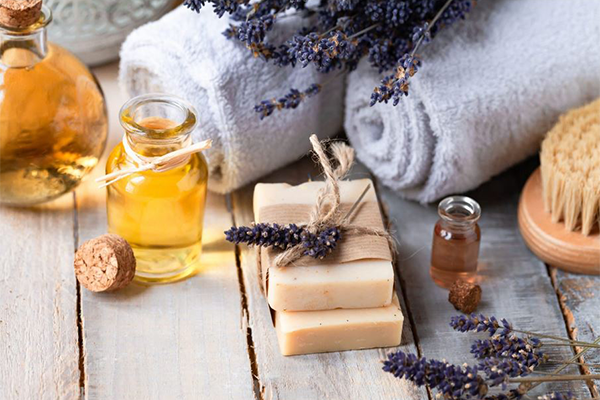
Beyond cooking, Mustard Oil In India has significant demand in massage and physiotherapy products, hair oil formulations (particularly in North India), Ayurvedic preparations, and industrial lubricants. The non-food market for mustard oil is substantial and growing.
For manufacturers in these segments, sourcing requirements differ from food-grade needs. The oil doesn’t need to meet food-safety parameters but should be consistent in viscosity, colour, and fatty acid profile for formulation stability. Shree Uday Oil supplies mustard oil for both food and non-food industrial applications.
Mustard Oil for Pickles- A Special Use Case
India’s pickle industry, achaar, runs almost entirely on mustard oil in the North and East. The oil’s antimicrobial properties, particularly from allyl isothiocyanate and Glucosinolates, make it a natural preservative. Pickles made in mustard oil last longer without added chemical preservatives than those made in refined neutral oils.
For food manufacturers producing achaar, murabba, or similar products, mustard oil quality is a formulation variable, not just an ingredient. Acid value, pungency level, and colour consistency affect shelf life and taste. Working with a supplier who understands these specifications and can maintain batch consistency is not optional it’s how you keep your product tasting the same across production runs.
Uses

Shree Uday Oil's Mustard Oil
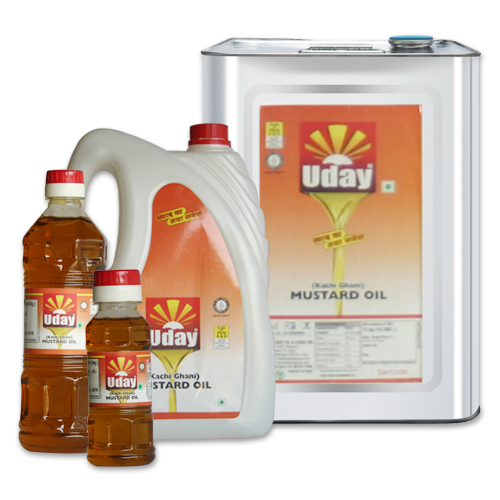
Shree Uday Oil supplies mustard oil under both the Suraj Mustard Oil retail brand and in bulk for food manufacturers and export buyers. The firm has been functioning from Chhatral GIDC, Gandhinagar from 1991 onwards and has developed a customer base which covers both domestic food manufacturers, retail outlets and even exports to Middle Eastern countries and South Asia.
For enquiries: udayoilgroup@gmail.com or call +91 9377011342.